
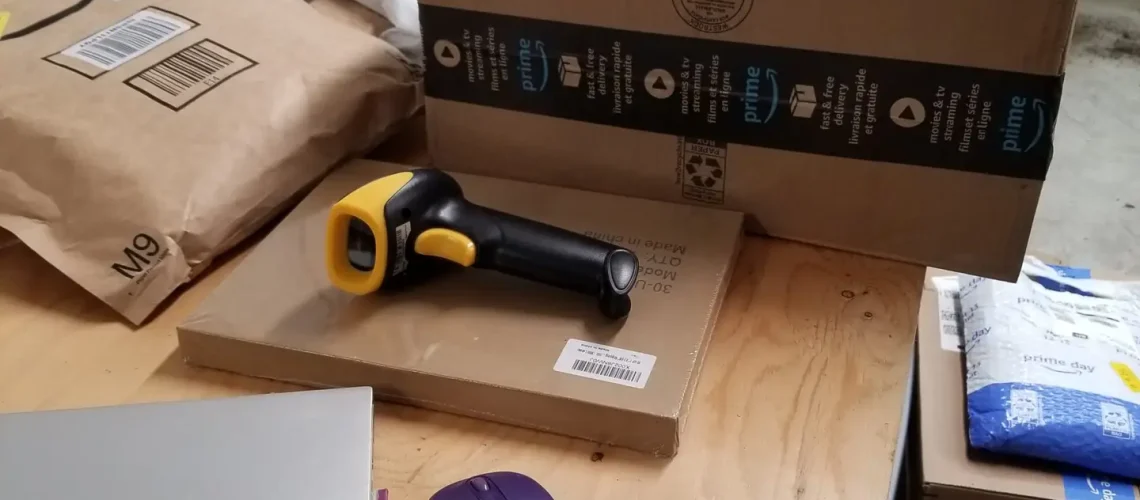
TL;DR: Amazon discontinued its FBA Labeling Service in 2026, removing the safety net that absorbed factory-level FNSKU errors. Canadian sellers who ship directly from suppliers to Amazon without a third-party prep centre now face inbound performance penalties and shipment rejections. A local Ontario prep centre acts as a compliance checkpoint before inventory reaches Amazon’s fulfillment network.
In a major policy shift for 2026, Amazon has officially discontinued its in-house FBA Labeling Service for many categories, requiring sellers to ensure all inventory arrives at fulfillment centers with 100% accurate, scannable FNSKU labels already applied.
For international sellers shipping directly from factories to Canada, this change presents a massive hurdle. Without Amazon “fixing” your labels at the dock, non-compliant shipments face the risk of being rejected, sidelined, or hit with heavy “unplanned service” fees.
Here is why partnering with a specialized Canadian Prep Center like Moroprep is no longer optional—it is a business necessity.
1. Compliance is the New Barrier to Entry
Previously, many sellers relied on Amazon’s “Label Service” for a small fee per unit. With this service gone, the burden of compliance falls entirely on the seller. Factory-level labeling is notoriously prone to errors—wrong barcodes, poor print quality, or misplaced stickers.
- The Moroprep Solution: We act as your final gatekeeper. We inspect factory labels and apply high-quality, thermal-printed FNSKU stickers that are guaranteed to pass Amazon’s 2026 scanning requirements.
2. Avoiding “Inbound Performance” Penalties
Amazon has increased penalties for “Inbound Performance Summary” violations. Shipments with missing or unreadable labels can lead to temporary suspension of shipping privileges.
- The Moroprep Solution: By routing your inventory through our St. Thomas, Ontario facility first, you ensure that every single unit is “FBA-Ready” before it ever reaches Amazon’s doors.
3. Quality Control at the Local Level
When you ship thousands of miles from an overseas factory, you are flying blind. Defective products or damaged packaging often lead to negative customer reviews that can kill a listing.
- The Moroprep Solution: While we relabel your items, we also perform a visual inspection. If a box is crushed or a seal is broken, we catch it here in Canada, saving you from a high return rate and a damaged brand reputation.
Efficiency You Can See: The Moroprep Advantage
We understand that speed is everything in the Amazon ecosystem. Our facility is optimized for high-volume relabeling with a focus on precision.
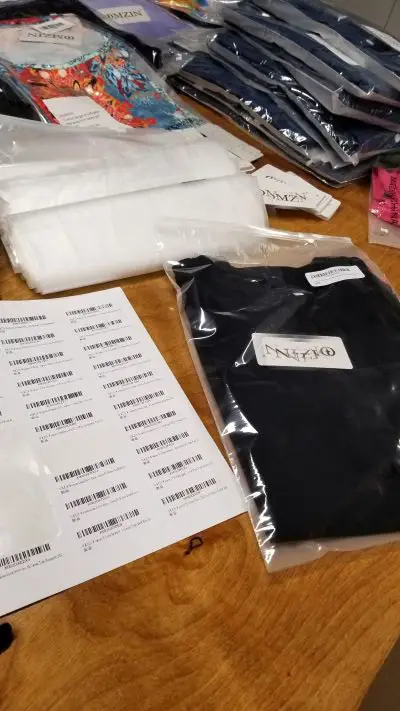
Precision matters. Our team ensures every FNSKU label is placed according to Amazon’s exact specifications, particularly for apparel and poly-bagged items which require specific placement for scanning efficiency.
Why Moroprep?
- Strategic Location: Perfectly positioned in Ontario to serve the busiest Amazon Fulfillment Centers in Eastern Canada.
- 24-48 Hour Turnaround: We know that “Inventory is Money.” We get your goods relabeled and back on the road in record time.
- No Hidden Fees: Transparent per-unit pricing for relabeling, so you can calculate your margins with confidence.
Conclusion: Future-Proof Your Amazon Business
The discontinuation of Amazon’s labeling service is a signal that the platform is moving toward a more “hands-off” logistics model. Sellers who adapt by securing a reliable 3PL partner will thrive, while those who rely on factory-direct shipping face increasing risks.
Don’t let a labeling error stop your sales.
Contact Moroprep Today to discuss our 2026 FBA Relabeling packages. Secure your spot in our workflow and keep your inventory moving.
What Exactly Was the FBA Labeling Service
Before Amazon discontinued it, the FBA labeling service allowed sellers to ship products directly to Amazon fulfillment centers without applying FNSKU labels themselves. For a per-unit fee of approximately $0.55, Amazon warehouse staff would apply the required labels upon receipt. It was a convenient option for sellers who wanted to simplify their supply chain — especially those shipping directly from overseas manufacturers who lacked the equipment or expertise to label correctly.
The appeal was straightforward: fewer steps between factory and fulfillment center, and no need to coordinate a separate labeling operation. However, the service came with meaningful risks that many sellers underestimated. Commingling — where your units are mixed with identical ASINs from other sellers — introduced the possibility of counterfeit or inferior products being shipped to your customers under your listing. Mislabeling errors at the fulfillment center, while uncommon, did occur and were difficult to dispute after the fact.
As of 2026, Amazon has ended this service for most product categories. Sellers who relied on it as a default workflow now face a hard requirement: every unit must arrive at the fulfillment center already labeled with its correct FNSKU barcode. There are no grandfathered exceptions for established sellers, and the timeline for compliance was shorter than many anticipated.
The Real Cost of Non-Compliant Inbound Shipments
The consequences of sending unlabeled or incorrectly labeled inventory are no longer just a slap on the wrist. Amazon’s fulfillment centers will reject non-compliant shipments outright, and the downstream costs add up fast. Consider a realistic scenario: a 200-unit shipment flagged at the fulfillment center for missing FNSKU labels.
The seller faces return shipping from the fulfillment center back to a usable address — typically around $85 for a standard-sized shipment. Emergency relabeling at a prep center, prioritized to get the inventory back into the pipeline quickly, runs approximately $120. Resubmission shipping back to the assigned fulfillment center adds another $70. That puts the unplanned out-of-pocket cost at roughly $275 — before accounting for the 2 to 3 weeks of lost selling time while the inventory sits in limbo.
If this happens during a peak selling window — Q4, Prime Day, or a promotional period — the lost sales opportunity can dwarf the direct costs. Amazon may also assess a non-compliance fee ranging from $0.50 to $2.00 per unit on top of the return and resubmission costs. A single compliance failure on a mid-size shipment can easily erase the margin on that entire batch.
Step-by-Step: Setting Up a Compliant Inbound Workflow
Avoiding these costs requires building a reliable inbound process before your product leaves the factory. Here is a straightforward four-step workflow that Canadian FBA sellers are moving to:
- Generate FNSKU labels from Seller Central before your shipment ships. Create your inbound shipment plan in Seller Central, download the FNSKU barcodes for each SKU, and send the label files to your prep center ahead of the physical inventory. Do not wait until the goods arrive.
- Route your shipment to a Canadian prep center instead of directly to Amazon. A facility like MoRo Prep in St. Thomas, Ontario receives your goods, inspects them, and stages them for compliant processing. This step intercepts any problems — quantity discrepancies, damaged units, incorrect items — before they become Amazon’s problem and yours.
- Prep center applies labels, poly-bags units if required, and verifies unit counts. Each unit gets its FNSKU label applied accurately, any bundling or poly-bag requirements are met, and the final count is confirmed against your purchase order. This is the compliance checkpoint that protects you from rejection at the fulfillment center.
- Prep center creates the FBA inbound shipment and ships directly to the assigned Amazon fulfillment center. Whether Amazon routes your inventory to YYZ1, YYZ4, or another facility, the prep center handles the shipment creation and carrier booking. You receive tracking confirmation without managing the logistics yourself.
Common Questions
Q: Can I still use Amazon’s prep service for certain categories?
As of 2026, labeling through Amazon is no longer available for most product categories. Do not assume your category is an exception. Check the prep requirements tool inside Seller Central for your specific ASIN before building any workflow that relies on Amazon applying labels for you.
Q: How long does prep center processing take?
MoRo Prep typically processes inbound shipments within 24 to 72 hours of receipt at their St. Thomas facility. Expedited processing is available for time-sensitive restocks or situations where inventory levels are critically low.
Q: Is using a prep center more expensive than Amazon’s old labeling service?
Not meaningfully. Per-unit prep center rates for labeling are generally in the $0.35 to $0.55 range — competitive with what Amazon was charging. The difference is that prep center pricing is predictable, there are no rejection fees, and you gain quality control that Amazon’s warehouse staff never provided. When you factor in the cost of a single non-compliant shipment, the math favors the prep center decisively.