
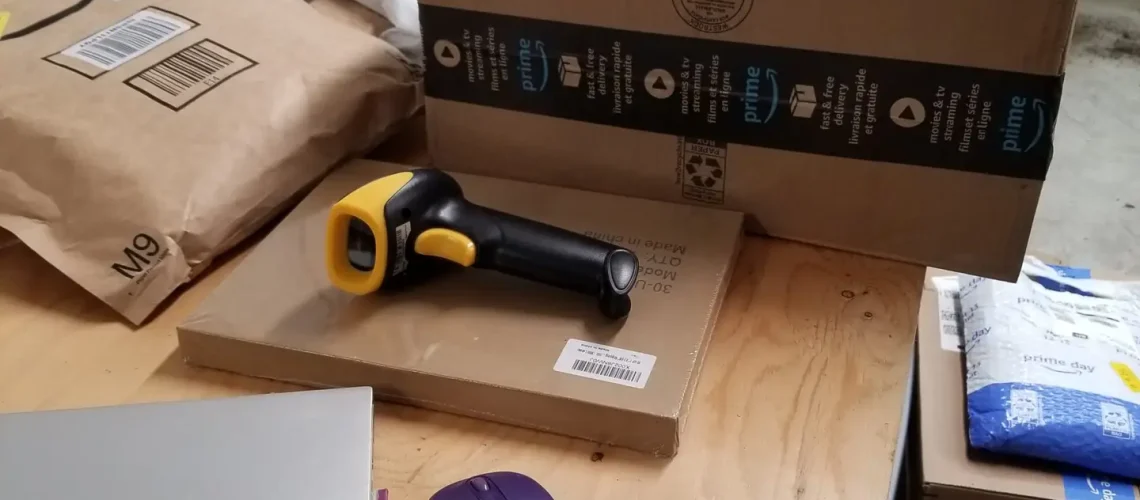
Selling on Amazon.ca offers incredible growth opportunities, but for international sellers, the “Return Trip” can be a logistical nightmare. Between high international shipping costs and Amazon’s strict local return policies, many sellers end up choosing “Dispose” – literally throwing money away.
In this guide, we’ll show you how to turn the tide on returns and protect your bottom line in 2026.
The Challenge: Why Returns Hurt Overseas Sellers
Amazon Canada requires all sellers to either provide a local Canadian return address, offer a “Returnless Refund,” or pay for expensive international return shipping. For most brands based outside of Canada, none of these options are ideal. Without a local partner, you lose visibility into why a customer returned an item. Is it actually broken, or just a “buyer’s remorse” return with a perfect product inside?
The Solution: The Strategic Role of a Canadian Prep Center
A professional partner like Moroprep acts as your “eyes and ears” on the ground. We don’t just receive boxes; we manage a detailed recovery lifecycle:
1. Professional Receiving & Documentation
The process begins the moment your inventory leaves the Amazon Fulfillment Center. Unlike generic warehouses, we document every arrival with precision to ensure your inventory is tracked from the start.
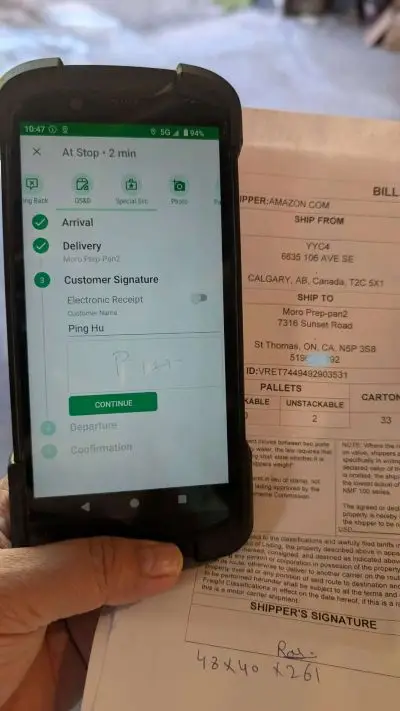
Caption: Our team uses advanced handheld terminals to sync with arrival notices, ensuring that every pallet and carton is accounted for the moment it hits our dock.
2. Detailed Inspection: Is it Sellable?
Amazon’s warehouse staff often marks items as “unfit” due to minor packaging issues. We perform a multi-point inspection to determine the actual condition of your products.
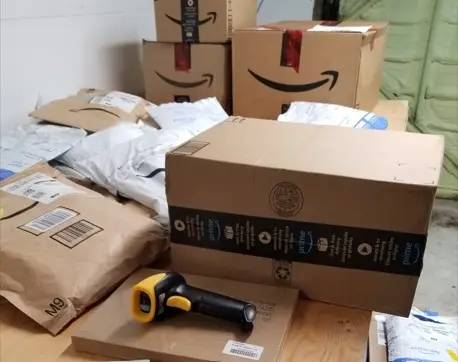
Caption: By scanning every unit individually, we filter out true damages from simple “buyer’s remorse” returns, allowing us to salvage high-value inventory.
3. Relabeling & Refurbishment (The Value Add)
A return doesn’t have to be a loss. Our specialized station handles the essential work of getting products shelf-ready again, saving you from total inventory loss.
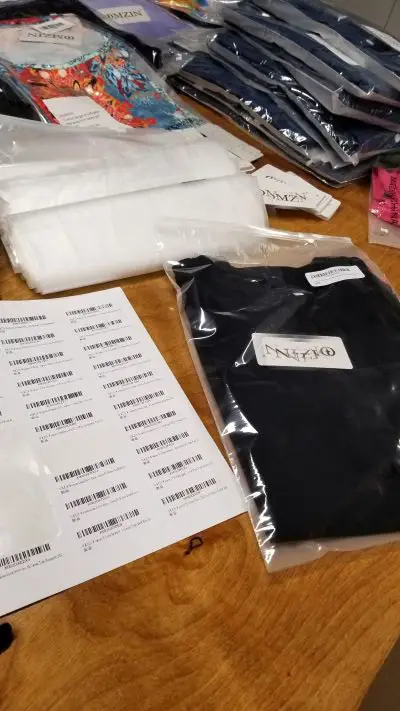
Caption: We provide professional FNSKU relabeling and clean repackaging. Whether it’s refreshing a polybag or applying new barcodes, we ensure your products meet Amazon’s strict compliance standards.
Why Partner with Moroprep?
Located strategically in St. Thomas, Ontario, Moroprep is designed to solve the specific pain points of international Amazon sellers:
- Lightning-Fast Turnaround: We process returns and inspections within 24-48 hours. Speed is critical to getting your “Buy Box” back.
- 30-Day Free Storage: We give you the time to make the right decision without worrying about mounting storage fees.
- Bilingual Support: We bridge the time-zone and language gap with support in both English and Chinese (via WeChat and WhatsApp).
Conclusion: Don’t Let Returns Kill Your Margins
In 2026, the difference between a profitable Amazon business and a failing one is Inventory Management. By using a local Canadian prep center, you reduce waste, save on shipping, and maintain the highest possible product quality for your customers.
Stop Disposing, Start Recovering.
Ready to set up your Canadian Return Address? Contact Moroprep Today or scan our WeChat for an instant consultation.
When return inventory still has resale value but needs relabeling and repackaging before FBA re-entry, the process mirrors removal order handling. For a detailed breakdown of how that recovery workflow runs, see FBA Returns Relabeling & Value Recovery Canada.
Understanding Amazon Canada Return Rates by Category
Return rates are not uniform across product categories, and understanding your category’s baseline is the first step to separating a systemic problem from normal volume. Electronics and tech accessories typically see return rates between 15–25%, driven by setup complexity and buyer remorse. Apparel runs higher at 20–35%, largely due to fit and colour expectations that product photos can’t fully communicate. Health and personal care products sit at the lower end — 5–10% — while home goods typically land in the 8–15% range.
These benchmarks matter because they give you a diagnostic threshold. If your return rate exceeds your category’s average by more than 5 percentage points, the cause is almost always inspectable. The three most common culprits are packaging failure (units arriving damaged), product description mismatch (the item doesn’t match what the listing promised), or a recurring defect originating from a specific production batch. None of these are invisible problems — they show up in the unit itself, in the packaging, and in the return reason codes Amazon attaches to every transaction. A prep center that conducts detailed, photo-documented inspections gives you access to this data in a form your supplier can actually act on. Without it, you’re absorbing return costs without any mechanism to reduce them.
The True Cost of Disposal vs. Recovery
When overseas sellers choose “Dispose” in Seller Central, the line item looks manageable: Amazon charges $0.97–$1.97 per unit for standard-size disposal. It feels like a clean exit. The actual cost is considerably higher once you account for the inventory value you’re writing off, the reorder cost to replenish those units, and the ranking velocity you lose during the out-of-stock period that follows a large removal batch.
Consider a concrete example. A seller has 150 returned units with a cost of goods of $28 per unit. They elect disposal. The direct disposal fee runs approximately $145. The lost inventory value is $4,200. Total write-off: roughly $4,345 — before factoring in reorder lead time or the FBA stock level drop that suppresses organic rank while the replacement shipment is in transit.
Now consider the recovery path. Professional returns processing typically costs $3.50–$5.00 per unit, covering receiving, inspection, relabeling, and repackaging. On those same 150 units, a 70% recovery rate — a realistic figure for most general merchandise categories — returns approximately 105 sellable units back to FBA. At $28 COGS, that’s $2,940 in recovered inventory value. When you set the two scenarios side by side, the net difference between disposal and recovery on a single removal batch is approximately $7,285. Across multiple removal batches per year, the compounding impact on your P&L is substantial.
How to Set Up a Canadian Return Address Through a Prep Center
Configuring a Canadian return address takes three steps and can be completed in under fifteen minutes once your prep center relationship is in place.
- Confirm return address service with your prep center. Not every prep center accepts customer returns — some handle only inbound FBA prep. Confirm explicitly that returns receiving is part of their service offering and obtain their physical intake address. MoRo Prep’s address for incoming returns is 7316 Sunset Road, St. Thomas, ON N5P 3S8.
- Update your return address in Seller Central. Navigate to Settings → Account Info → Returns Information. Set your Canadian return address to the prep center’s address. Once saved, Amazon will route customer-initiated returns to that address instead of defaulting to its own returns processing or attempting an international return to your origin country.
- Notify the prep center of your account details. Provide your seller account name and any relevant SKU or FNSKU information so the prep center can match incoming returns to your inventory as they arrive. Some prep centers will provide you with a unique reference code to include in your Seller Central account notes for this purpose.
From the point this configuration is live, customer returns route directly to the prep center. This eliminates Amazon’s default handling for international sellers — which typically results in either disposal at your expense or an international return shipment that costs more than the unit is worth.
Reading Return Reason Codes to Fix the Root Cause
Amazon attaches a return reason code to every customer return, and these codes are one of the most underused data sources available to sellers. The codes worth tracking closely fall into four categories.
“Item not as described” points to a listing problem. Start with your main image and your bullet points — buyers are comparing what arrived against what the page showed them. A mismatch in colour, dimensions, or included accessories is usually visible in the photos a prep center takes during inspection.
“Defective / does not work as expected” points to a quality problem. Cross-reference the units flagged with this code against their production batch or shipment date. A cluster of defective returns from a single batch is actionable supplier feedback.
“Arrived damaged” points to a packaging problem. Review your inner carton cushioning and the gauge of your shipping carton. Damage that originates in transit rather than at the warehouse typically shows specific pressure or drop patterns that are identifiable on inspection.
“Accidentally ordered” and “No longer needed” are generally demand-side returns, often seasonal, and rarely actionable at the product or listing level. Tracking these separately prevents them from inflating your apparent defect rate.
A prep center that documents reason codes alongside unit-level inspection findings gives you a feedback loop that closes the gap between your returns data and your supplier conversations — reducing future return volume rather than simply processing what’s already come back.
Resale Options for Recovered Inventory
Once units pass inspection and relabeling, you have three realistic paths forward, each suited to a different condition outcome.
Return to FBA is the most common and highest-value path. Units that meet Amazon’s condition standards for “new” or “used — like new” can go directly into your next inbound shipment. For most product categories, the majority of returned units fall into this group — they’ve been opened, inspected, and found to be functionally intact. Relabeled and repackaged to standard, they’re indistinguishable from first-run inventory.
Alternative sales channels serve units that don’t meet FBA condition thresholds but retain meaningful resale value. eBay Canada, Facebook Marketplace, and local liquidation buyers are all viable outlets for goods in fair or good condition that Amazon’s grading criteria would exclude. Some prep centers maintain established relationships with local liquidators and can facilitate bulk disposition on your behalf, converting units that would otherwise be written off into partial cost recovery.
Donation or managed disposal applies to units that are genuinely unsalvageable for resale. Rather than paying Amazon’s per-unit disposal fee, some sellers route these units through charitable donation programs, which can generate a tax receipt under Canadian charitable giving rules. Your prep center can coordinate local donation drop-offs, handling the logistics without requiring you to arrange cross-border shipment for a write-off quantity.