
TL;DR: YXU1 is Amazon Canada’s fulfillment centre in St. Thomas, Ontario — a 2-million-square-foot robotics-first facility built on a former Ford plant. It serves southwestern Ontario demand, handles inventory routed from the YYZ cluster, and is the primary facility for removal orders returning to the St. Thomas / London corridor. MoRo Prep’s St. Thomas location is within driving distance of YXU1.
For sellers shipping inventory into Amazon Canada, understanding YXU1 is useful — but what matters operationally is whether inventory can be received, relabeled, inspected, and routed correctly inside a Canada-based prep workflow. If your inventory needs FNSKU relabeling, returns handling, or removal order processing, see our Amazon Prep Center Canada service.
As Amazon continues to restructure its fulfillment network in Canada, one facility has quietly become a critical node in Southwest Ontario: YXU1.
YXU1 is an Amazon regional fulfillment center in St. Thomas, Ontario. It is part of Amazon Canada’s regionalized logistics network and serves Southwest Ontario and cross-border corridors.
For many sellers, YXU1 is often mentioned as “a new warehouse near London.”
In reality, YXU1 represents a structural shift in how inventory flows across Ontario—especially under Amazon’s 2026 regionalized fulfillment strategy.
This article explains what YXU1 is, why it matters, and when sellers should actively factor it into inventory and relocation decisions.
What Is YXU1?
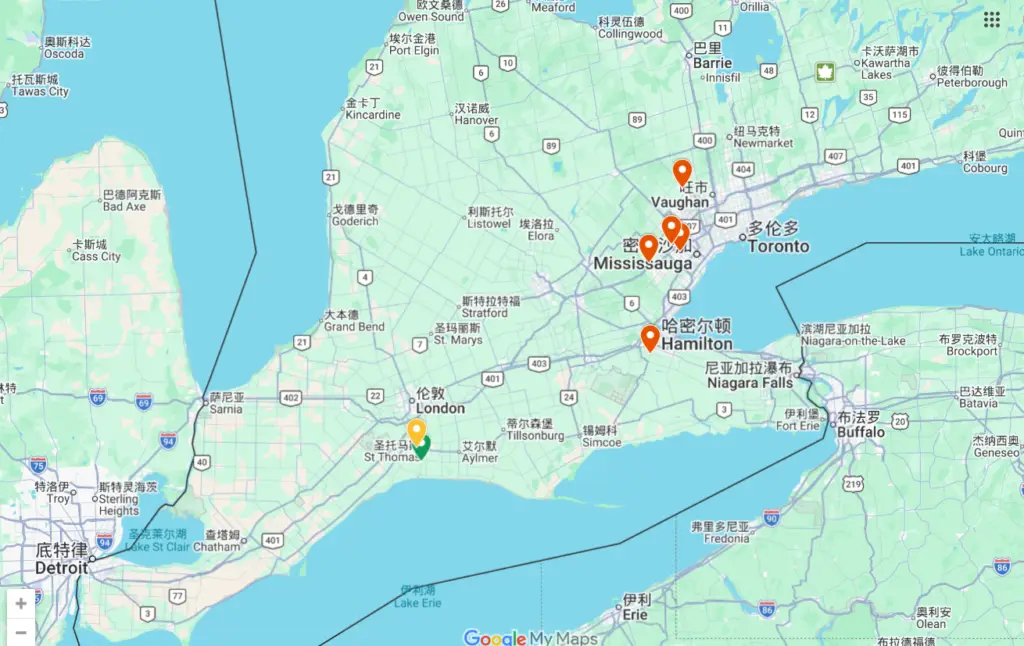
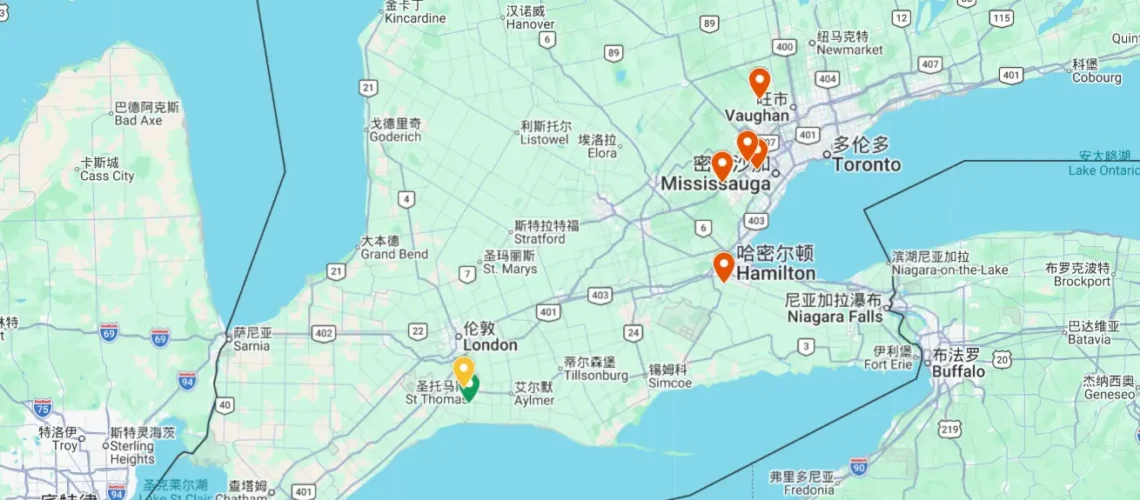
Ontario logistics structure showing YXU1 and St. Thomas positioned west of the GTA core fulfillment cluster.
For sellers, the more useful question is not just what YXU1 is, but how this Ontario execution point affects prep, returns, and inventory routing decisions inside Canada. YXU1 is an Amazon regional fulfillment center located in the St. Thomas / Talbotville area of Southwest Ontario.
Built on the former Ford St. Thomas Assembly Plant site, YXU1 symbolizes a transition from traditional manufacturing infrastructure to highly automated logistics execution. The facility spans approximately 2 million square feet and operates as one of the most advanced fulfillment centers in the region.
Unlike older GTA-area fulfillment centers, YXU1 was designed from the ground up to support high-volume, high-velocity regional fulfillment rather than long-term static storage.
A Robotics-First Fulfillment Facility
YXU1 is part of Amazon’s next-generation robotics-enabled fulfillment network.
Key characteristics include:
- Robotics-driven picking and sorting, shifting from “people-to-goods” to “goods-to-people”
- Computer vision–dependent label recognition, increasing sensitivity to FNSKU accuracy and placement
- High-throughput dock-to-stock cycles, significantly reducing inbound processing time
This design explains why Amazon’s labeling and compliance requirements have become more stringent in recent years:
automation efficiency depends entirely on machine-readable accuracy.
YXU1’s Role in Amazon’s 2026 Regionalization Strategy
Under Amazon’s evolving regional fulfillment model, YXU1 serves two primary strategic functions:
1. A Load-Balancing Node for Southwest Ontario
YXU1 absorbs fulfillment volume from:
- The western portion of Highway 401
- London–Windsor economic corridor
- Cross-border freight flows from Michigan
By doing so, it reduces reliance on heavily congested GTA fulfillment centers (YYZ cluster), which have long operated under high utilization and transportation pressure.
2. A Speed-Oriented Execution Point
Compared with older GTA facilities, YXU1 benefits from:
- Lower inbound congestion
- Faster trailer turnaround
- Shorter dock-to-stock timelines
For sellers concerned about restock speed, stockout penalties, or regional allocation delays, YXU1 often functions as a more stable execution endpoint.
Why Sellers Will Increasingly “Encounter” YXU1
Many sellers do not actively choose YXU1—but still end up interacting with it.
This is because Amazon’s internal allocation logic increasingly favors regional efficiency over seller preference. When inventory is routed through Southwest Ontario, YXU1 becomes the default execution node.
In practical terms, this means:
- More inbound shipments are assigned to YXU1
- More removals and redistributions pass through the 401 West corridor
- Sellers must account for stricter prep and compliance standards
Ignoring YXU1 does not prevent exposure to it.
Understanding it does.
The Geographic Advantage: YXU1 and St. Thomas
YXU1’s effectiveness is closely tied to its location.
Positioned along Highway 401 West, the facility sits outside the GTA congestion zone while remaining within efficient trucking distance of Ontario’s major fulfillment corridors.
This creates a structural advantage:
- Reduced transportation friction
- Lower operational overhead
- Faster execution cycles
For third-party logistics and reverse logistics operations, proximity to YXU1 is not a branding point—it is an execution variable.
When Sellers Should Actively Factor YXU1 into Decisions
For a broader view of how Amazon distributes inventory across its Canadian network, see our overview of Amazon regional allocation in Canada — which explains why inventory ends up at facilities like YXU1 in the first place.
YXU1 becomes especially relevant when sellers are dealing with:
- Regional inventory rebalancing
- Removal orders and redeployment
- Prep-sensitive inbound shipments
- High-velocity replenishment under capacity constraints
In these scenarios, location and execution speed often matter more than nominal storage or handling fees.
YXU1 FAQ: Direct Answers
What is YXU1?
YXU1 is a regional Amazon fulfillment center located in St. Thomas, Ontario. It serves Southwest Ontario and supports Amazon Canada’s regionalized logistics network.Add image
Where is YXU1 located in Canada?
YXU1 is located in the Talbotville / St. Thomas area, west of the Greater Toronto Area along Highway 401.
Why are sellers being routed to YXU1?
Under Amazon’s 2026 regionalization strategy, inventory destined for Southwest Ontario is increasingly processed through YXU1 to reduce congestion in GTA-based fulfillment centers and improve regional delivery speed.
Does YXU1 affect Amazon inventory allocation?
Yes. YXU1 functions as a regional execution node, meaning inventory may be routed there based on geographic demand balancing and capacity optimization.
Is YXU1 faster than GTA fulfillment centers?
In many cases, YXU1’s automation-first design enables faster dock-to-stock processing and improved regional throughput compared to older GTA facilities.
Final Perspective
YXU1 is not simply a new fulfillment center.
For sellers, its importance lies less in the label of the facility and more in what this shift means for inbound prep, returns processing, removal handling, and inventory recovery inside Canada.
As fulfillment networks become more automated and regionally segmented, sellers who understand where execution happens—and why—will be better positioned to control cost, risk, and inventory velocity.
Understanding YXU1 is no longer optional.
It is part of operating within Amazon Canada’s evolving fulfillment reality.
Ontario logistics structure showing YXU1 and St. Thomas positioned west of the GTA core fulfillment cluster.
Related Seller Services in Canada
Amazon Prep Center Canada — Full-service prep support for overseas sellers shipping inventory into Canada.
Amazon Returns Processing Canada — Inspect, relabel, and recover returned inventory for resale or FBA re-entry.
Amazon Removal Order Processing Canada — Receive and process Amazon removal inventory for recovery and re-entry.
For sellers, node awareness alone does not solve inventory problems. What matters operationally is whether inventory can be received, relabeled, inspected, and routed correctly through a Canada-based prep workflow.
Learn more about our Amazon Prep Center Canada service.