Depth Over Scale: Why We Chose Focus Over Expansion

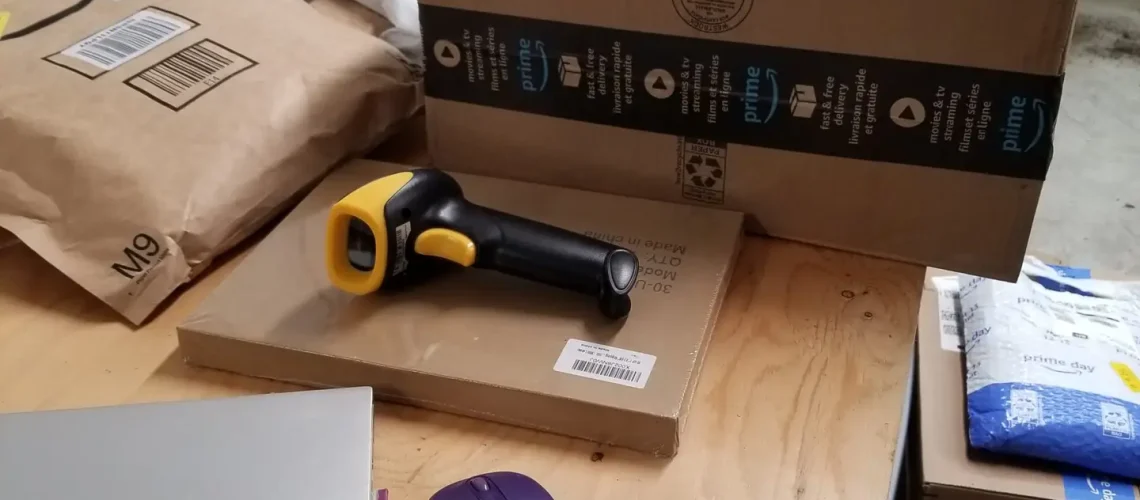
Amazon relabeling services in Canada for FBA sellers

In an industry that constantly celebrates scale, coverage, and warehouse count, we chose a different path.

While many fulfillment providers compete on how many locations they operate or how wide their network spreads, we deliberately decided to focus on depth—one operation, fully controlled, deeply managed.

This was not a limitation of capability.
It was a strategic choice.

A Pattern We Kept Seeing

The question sellers often ask us sounds simple:

“Do you have a warehouse in Vancouver?”
“Can you cover the U.S. border?”

But as conversations go deeper, a different set of concerns always surfaces:

  • “A shipment was mishandled at my current warehouse last month. How do you prevent operational errors?”
  • “Every issue I raise gets passed between teams. Who is actually accountable?”
  • “When something goes wrong, I need answers—not tickets.”

These questions revealed something critical:

Most sellers don’t fail because they lack warehouse locations.
They fail because they lack control, clarity, and accountability in execution.

That insight shaped everything that followed.


The False Promise of Scale

In third-party logistics, scale is often treated as credibility.

More warehouses are assumed to mean:

  • Faster coverage
  • Better redundancy
  • Stronger infrastructure

In practice, scale often introduces the opposite:

  • Fragmented operating standards
  • Multiple handoffs across teams
  • Inconsistent execution quality
  • Delayed decision-making when problems arise

When inventory is distributed across multiple facilities, sellers inherit not just storage space—but operational complexity.

Different teams.
Different SOP interpretations.
Different communication paths.

And when mistakes happen, responsibility becomes diluted.


Why We Chose Depth Instead

Rather than expanding horizontally, we invested vertically.

We chose to concentrate all resources—people, systems, processes—into a single Canadian operation that we can fully control end-to-end.

This decision allows us to build something scale alone cannot provide.


1. Execution Precision Through One System

Operating within one unified facility allows us to enforce a single, rigorous operational standard.

Every inbound check, every relabeling step, every outbound verification follows the same SOP—executed by the same trained team.

There is no “handoff decay.”
No loss of context between locations.
No ambiguity in responsibility.

This closed-loop execution model significantly reduces operational errors and enables continuous refinement of processes over time.


2. Direct Accountability, Not Ticket Chains

We intentionally eliminated layered support structures.

When a seller contacts us, they are not routed through generic customer service queues. They speak directly with operators who are embedded in daily warehouse execution.

That means:

  • Immediate access to real inventory data
  • Faster root-cause analysis
  • Decisions made by people who own outcomes

Shorter communication paths translate into faster resolution—and, more importantly, trust built on action rather than explanations.


3. Predictable Cost and Transparent Operations

Complex warehouse networks often introduce complex billing.

Inter-warehouse transfers.
Internal reconciliations.
Ambiguous cost attribution.

By operating one deeply managed facility, every cost is directly tied to a visible action. Sellers can clearly see what happened, where it happened, and why it was charged.

This transparency enables meaningful cost analysis and informed inventory decisions—especially critical in an environment where holding costs, relabeling requirements, and removal decisions increasingly impact account health.


Redefining Trust: From Scale to Process

For sellers operating across borders, trust does not come from how many dots appear on a map.

Trust comes from visibility and predictability.

That is why we prioritize operational transparency:

  • System visibility: real-time inventory and activity access
  • Process clarity: shared SOP expectations
  • Communication openness: direct discussions, not scripted responses

Trust is not claimed.
It is built shipment by shipment.


A Deliberate Trade-Off

Choosing depth over scale means saying no—to clients who only seek the lowest rate, or those who prioritize geographic reach over execution reliability.

We work with sellers who understand that logistics is not a commodity, but a critical layer of their business.

They don’t need more warehouses.
They need fewer unknowns.


Our Commitment

We may never be the provider with the largest footprint.

But we aim to be the one sellers rely on when execution matters most—when inventory decisions affect cash flow, account health, and long-term viability.

In an industry obsessed with expansion, we believe focus creates a different kind of strength.

One operation.
One accountable team.
One standard of execution.

That is the depth we chose—and the depth we continue to build.

Next:
Inventory Decision Framework (2026)
Removal vs Liquidation vs Hold

Share this post